
Updated 2026-08-31 · professionally reviewed by Autoservis 1How we review content
Practical advice
The short answer: condition matters more than mileage
Brake pads and discs do not have one universal replacement interval. Vehicle weight, driving style, traffic, hills, corrosion and component design all change the wear rate. The reliable decision comes from measuring the remaining pad material, checking the disc surface and thickness, and confirming how the car behaves under braking.
Brake pads and discs wear differently
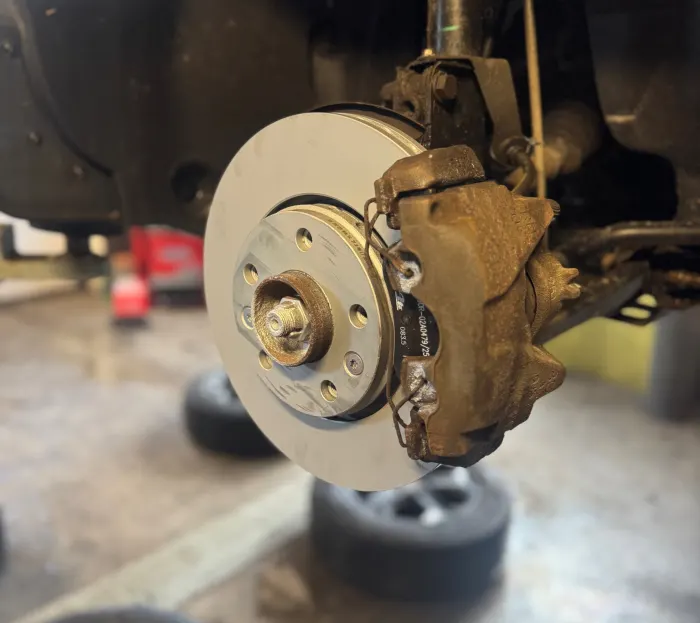
Pads are the friction material pressed against the rotating disc. They normally wear faster. Discs can often remain in service through more than one pad set, but only if their thickness and surface are still within the correct limits. Replacing pads alone is not appropriate when a disc is below its specified minimum, deeply scored, cracked or badly corroded.
Warning signs that need a brake check
- Squealing: can come from wear, contamination, glazing or vibration; it needs inspection if it persists.
- Metal-on-metal grinding: may mean the friction material is exhausted and should be treated as urgent.
- Vibration in the pedal or steering wheel: can indicate uneven braking surfaces or another brake or chassis issue.
- Pulling to one side: may point to uneven braking, a sticking caliper or a tyre/chassis problem.
- Longer stopping distance or a soft pedal: is a safety warning, especially if the change is sudden.
What a proper brake inspection checks
We check the visible pad material, disc thickness and surface, caliper and slider movement, hoses, fluid leaks and the way the car brakes. The measured disc thickness is compared with the minimum specified for the relevant component or vehicle. This prevents replacing parts by guesswork.
Stop driving and call for advice if
- braking is noticeably weak or unpredictable
- the pedal suddenly feels soft or sinks
- you hear continuous metal-on-metal grinding
- the car pulls strongly under braking
- brake fluid is leaking, there is smoke or a red brake warning appears
What to send when booking
Include the make, model, year, engine, approximate mileage and the last brake service date if known. Describe whether the brakes squeal, grind, vibrate, pull to one side or feel weaker, and say whether the symptom appears when cold, after a longer drive, at speed or only under harder braking.
For service scope and indicative labour prices, continue to our brake service page or the English price list. We explain the finding and agree the next step before repair work starts.
Brake pad and disc FAQ
Can I still drive with worn brake pads or discs?
Do not continue driving if braking is weak, the pedal feels soft, you hear metal-on-metal grinding, the car pulls strongly or brake fluid is leaking. Light intermittent squealing still deserves a booked inspection because brake symptoms can worsen.
Do brake discs always need replacing with the pads?
No. The discs are inspected for thickness, scoring, cracks, corrosion and uneven wear. They are replaced only when their measured condition or the vehicle manufacturer's limit requires it.
How are brake pads and discs checked?
A proper brake check looks at pad material, disc thickness and surface, caliper movement, hoses, visible leaks and braking behaviour. Disc thickness is compared with the minimum specified for the part or vehicle.
What should I include in a brake service request?
Include the make, model, year, engine, mileage and when the symptom occurs. State whether the brakes squeal, grind, vibrate, pull to one side or feel weaker, and add the last brake service date if known.