
Updated 21 October 2026 · Autoservis 1
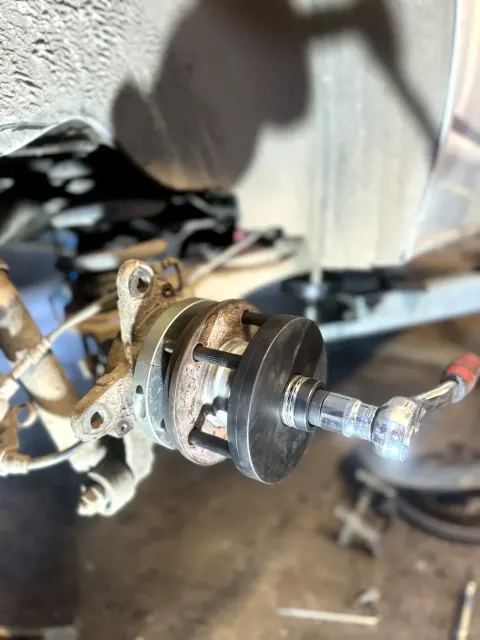
Workshop photograph, used to illustrate the topic.
Record the pattern, not a guessed part
Say whether the noise rises with road speed, changes on different surfaces or appears with vibration. Mention any change noticed during ordinary cornering, without performing tests to provoke it. A recent pothole impact or wheel and tyre change is useful context.
What else can sound like a bearing?
Tyre wear or damage, a brake-related problem and other hub or suspension faults can overlap with bearing noise. Do not assume that the side where you hear the sound is necessarily the faulty side. Sound travels through the car and the conditions in which it occurs matter.
Why inspection comes before replacement
The workshop needs to consider the tyre, brake, hub and any relevant play or damage. The correct method depends on the vehicle and symptoms. A recording may help describe the noise, but it does not replace a physical inspection or justify ordering a bearing on its own.
When to stop
Strong grinding, wheel-area heat, marked vibration, looseness or unstable handling call for immediate attention. Stop safely and discuss assistance rather than driving on to see if the sound gets louder. Do not use high-speed runs or deliberate swerving to locate the fault.
What affects the repair price?
The vehicle's hub and bearing arrangement, the confirmed defect and associated work affect the price. Describe the symptoms when requesting a chassis check; ask for a repair quote after the cause is established. Wheel balancing and bearing replacement solve different problems and are not interchangeable.
Discuss the next step
Send the make, model, year and the details relevant to your question. We will agree the scope, price and appointment with you.
Send a service enquiryPhotos and reports: autoservice1@seznam.cz. The form does not accept attachments.
Prices and service scope
See the current workshop price list. Starting prices do not establish the cause of a fault or the total repair bill.